
- Home
- Products
- Dapoxetine
- DULOXETINE/FLUOXETINE
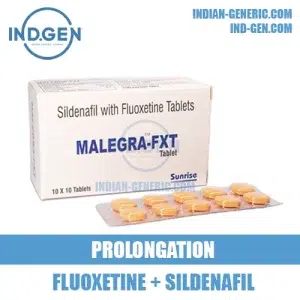
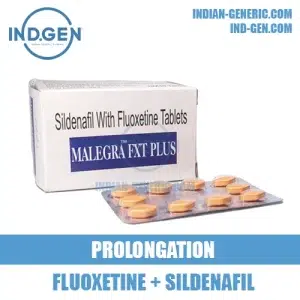
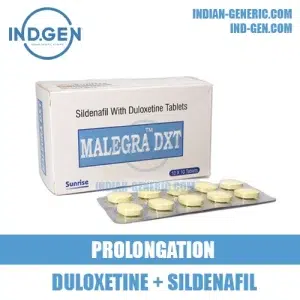
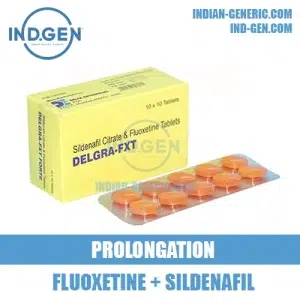
Duloxetine/Fluoxetine: effective antidepressants for the treatment of depression, anxiety disorders and premature ejaculation.
Depression, anxiety disorders, and premature ejaculation (PE) are common problems that can have a significant impact on a person’s quality of life. Duloxetine and Fluoxetine are two effective antidepressants that are widely used to treat these conditions. In this text, we will examine each of these drugs in detail (as they are different drugs, not a combination), their mechanisms of action, indications for use, rules of administration, contraindications, side effects, and other useful information.
Although they are antidepressants, they belong to different groups and have slightly different indications and features of use. There are combination drugs for the treatment of ED and PE containing SSRIs (eg, fluoxetine or dapoxetine) and PDE-5 inhibitors (eg, sildenafil), but Duloxetine and Fluoxetine are not combined separately in one drug .
Duloxetine tablets what is it?
Duloxetine is an antidepressant belonging to the group of selective serotonin and norepinephrine reuptake inhibitors (SSRIs). It is available in the form of enteric-coated capsules. Duloxetine is effective in the treatment of depression, generalized anxiety disorder, diabetic neuropathy, fibromyalgia, and chronic pain.
Fluoxetine tablets what is it?
Fluoxetine is an antidepressant that belongs to the group of selective serotonin reuptake inhibitors (SSRIs). It is available as capsules and tablets. Fluoxetine is used to treat depression, obsessive-compulsive disorder, bulimia, panic disorder, and premenstrual dysphoric disorder. It can also be used off-label to treat premature ejaculation.
What is the composition of Duloxetine?
Active ingredient: duloxetine hydrochloride . Excipients may vary depending on the manufacturer.
What is the composition of fluoxetine?
Active ingredient: fluoxetine hydrochloride . Excipients may vary depending on the manufacturer.
Who is the manufacturer of Duloxetine/Fluoxetine and what is a generic?
Original drugs:
- Duloxetine: The original drug is Cymbalta , manufactured by Eli Lilly and Company .
- Fluoxetine: The original drug is Prozac , manufactured by Eli Lilly and Company .
Both drugs have numerous generics . A generic is a medicine that contains the same active ingredient as the original drug, but is produced by another company after the patent for the original drug has expired. Generics have identical efficacy and safety profile as original drugs, but are usually much more affordable.
Why take Duloxetine?
Duloxetine is prescribed for the treatment of:
- Major depressive disorder (MDD).
- Generalized anxiety disorder (GAD).
- Diabetic peripheral neuropathic pain.
- Fibromyalgia.
- Chronic musculoskeletal pain.
Why take Fluoxetine?
Fluoxetine is prescribed for the treatment of:
- Major depressive disorder (MDD).
- Obsessive-compulsive disorder (OCD).
- Nervous bulimia.
- Panic disorder.
- Premenstrual dysphoric disorder (PMDD).
- Off-label : premature ejaculation.
How to take duloxetine?
Duloxetine is taken orally, regardless of food. The initial and maintenance dose is usually 60 mg once a day. In some cases, your doctor may prescribe a different treatment regimen. You should not change the dosage or stop taking the drug on your own without consulting your doctor.
How to take Fluoxetine?
Fluoxetine is taken orally, usually once a day, in the morning. The starting dose is usually 20 mg/day. If necessary, the doctor can gradually increase the dose. Do not change the dosage on your own or stop taking the drug without consulting your doctor.
What are the contraindications for Duloxetine?
- Hypersensitivity to duloxetine or other components of the drug.
- Concomitant use of monoamine oxidase inhibitors (MAOIs) or within 14 days of stopping their use.
- Uncontrolled angle-closure glaucoma.
- Severe liver failure.
- Severe renal failure.
- Age up to 18 years.
What are the contraindications for Fluoxetine?
- Hypersensitivity to fluoxetine or other components of the drug.
- Concomitant use of monoamine oxidase inhibitors (MAOIs) or within 14 days of stopping their use, as well as within 5 weeks of stopping fluoxetine.
- Concomitant administration of pimozide or thioridazine.
- Age up to 18 years (for some indications).
Does Duloxetine have any side effects?
The most common side effects of duloxetine are: nausea, dry mouth, constipation, loss of appetite, fatigue, drowsiness, dizziness, increased sweating.
Does Fluoxetine have side effects?
The most common side effects of fluoxetine are nausea, insomnia, drowsiness, headache, diarrhea, loss of appetite, anxiety, nervousness, decreased libido.
Can Duloxetine/Fluoxetine be taken with other medications?
Before you start taking duloxetine or fluoxetine, be sure to tell your doctor about all the medications you take, including over-the-counter medications, vitamins, and dietary supplements. Pay special attention to:
- MAO inhibitors: concomitant use is prohibited.
- Other antidepressants: Possible increased side effects.
- Medicines that affect blood clotting: May increase the risk of bleeding.
- Drugs metabolized by CYP2D6 (for duloxetine) and CYP2D6, CYP3A4 (for fluoxetine) enzymes: The concentration of these drugs in the blood may change.
- Lithium, tramadol, tryptophan Risk of developing serotonin syndrome.
- Thioridazine, pimozide (for fluoxetine): Concomitant use is prohibited.
Who is recommended to buy generic Duloxetine/Fluoxetine in the USA?
Generics of Duloxetine are recommended for patients who have been prescribed duloxetine by their doctor to treat depression, generalized anxiety disorder, diabetic neuropathy, fibromyalgia, or chronic pain.
Generic Fluoxetine is recommended for patients who have been prescribed fluoxetine by their doctor to treat depression, obsessive-compulsive disorder, bulimia, panic disorder, premenstrual dysphoric disorder, or (off-label) premature ejaculation.